The Resource
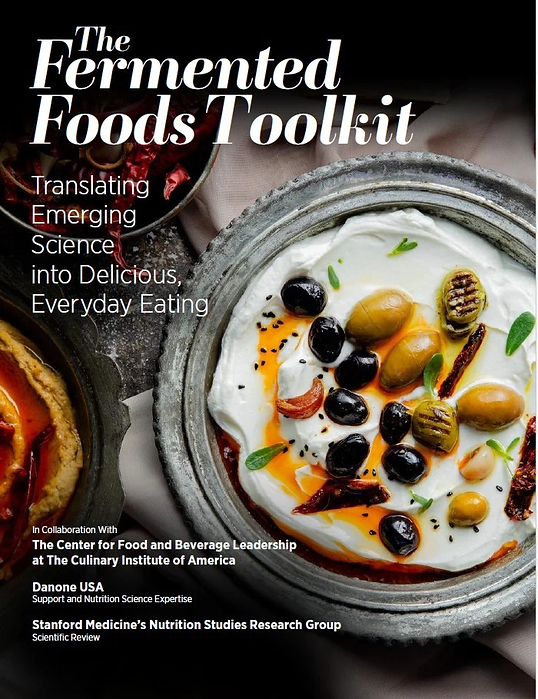
Danone USA has co-developed a digital nutrition toolkit targeting healthcare practitioners, chefs, and foodservice operators, marking a concrete output of the company's two-year founding commitment to the Food is Life, Food is Health initiative. Titled The Fermented Foods Toolkit: Translating Emerging Science into Delicious, Everyday Eating, the publication was built by The Center for Food and Beverage Leadership at The Culinary Institute of America with nutrition science support from Danone USA; researchers affiliated with Stanford Medicine's Nutrition Studies Research Group provided independent scientific review.
What It Covers
The toolkit synthesises emerging evidence on fermented foods — yogurt, kimchi, sauerkraut, miso — and their relationship to gut health and chronic disease risk reduction, including type 2 diabetes. Practically, it bundles three content streams for professional use: visual explainers that clarify the distinction between fermented and merely pickled foods, and how prebiotics differ from probiotics; flavour-forward recipes and pairing ideas designed for clinic teaching kitchens and foodservice menus; and culturally inclusive guidance that accounts for varied dietary traditions, budgets, and community needs. Kristen Rasmussen, MS, RDN, Program Director of Food is Life, Food is Health and Assistant Director of Health & Sustainability Programs at the Culinary Institute of America, said professionals had specifically requested tools that could function during a patient visit, in a teaching kitchen, or in a foodservice setting — feedback that directly shaped the resource's architecture.
Regulatory Backdrop
The publication's timing is notable in the context of U.S. regulatory developments. The toolkit explicitly covers the FDA's first qualified health claim for yogurt — the agency recognised an association between yogurt consumption and reduced risk of type 2 diabetes following a petition filed by Danone. That regulatory milestone gives foodservice operators and clinicians a clearer framework for positioning yogurt on menus and in dietary counselling, lending the toolkit practical compliance relevance beyond its educational function. For the foodservice sector, where gut-health positioning has moved from niche to mainstream across fast-casual and healthcare dining accounts, a credentialed, peer-reviewed resource from the CIA and Stanford provides operators with a defensible evidence base for menu decisions.
Strategic Context
The toolkit fits within a broader corporate posture for Danone, which employs roughly 5,000 workers across more than 10 U.S. manufacturing facilities and holds a portfolio that spans yogurt brands — Activia, Dannon, Oikos, Light + Fit — alongside plant-based lines such as Silk and So Delicious. Funding and co-developing a science-to-kitchen translation resource reinforces Danone's functional nutrition positioning at a time when competitors across the dairy and fermented-foods segment are intensifying investment in health-oriented marketing. Amanda Blechman, RD, Director of Nutrition and Scientific Affairs at Danone USA, framed the effort around professional reach: "By supporting science-based tools that can be used in clinics, kitchens, and communities, we hope to make evidence-based nutrition more accessible for the people and communities these professionals serve." The toolkit is available as a free download through the Food is Life, Food is Health platform, with no disclosed licensing or subscription cost.
Written by Michael Politz, Author of Guide to Restaurant Success: The Proven Process for Starting Any Restaurant Business From Scratch to Success (ISBN: 978-1-119-66896-1), Founder of Food & Beverage Magazine, the leading online magazine and resource in the industry. Designer of the Bluetooth logo and recognized in Entrepreneur Magazine's "Top 40 Under 40" for founding American Wholesale Floral, Politz is also the Co-founder of the Proof Awards and the CPG Awards and a partner in numerous consumer brands across the food and beverage sector.