Modena Consortium Doubles Down on U.S. Market Education The Consortium for the Protection of Balsamic Vinegar of Modena PGI will return to the Summer Fancy Food Show, taking place June 28–30 at New York's Javits Center. The dedicated booth at Stand 3221 in the Italian Pavilion will target buyers, media, and culinary professionals. Balsamic Vinegar of Modena PGI generates roughly 95 million liters of product annually for a global turnover of nearly a billion euros, with 90% exported worldwide. The United States ranks among the consortium's most important markets. "The Summer Fancy Food Show allows us to spotlight authenticity, interact with industry insiders, and fully communicate the complexity of Balsamic Vinegar of Modena to uninitiated audiences," says Cesare Mazzetti, President of the Consortium for the Protection of Balsamic Vinegar of Modena. "Now more than ever, it is vital that we emphasize the distinction between Balsamic Vinegar of Modena PGI and Italian-sounding condiments that create confusion in the American marketplace."
Creative Tastings and Educational Content Throughout the three-day show, the consortium will invite attendees to experience the product through tastings and educational programming. The booth will feature bespoke doughnuts filled with Balsamic Vinegar of Modena-infused chantilly cream from NYC bakery Angelina, and custom mocktails crafted with Balsamic Vinegar of Modena PGI by West Village's Donna. Educational masterclasses will be led by Robert Campana, founder of "Stop Italian Sounding," a platform highlighting distinctions between authentic Italian products and their imitators.
Consumer Appetite Remains Strong A 2025 survey on American consumers conducted by Federvini with the Italian research institute Nomisma found that more than 70% of U.S. consumers say they would continue purchasing Balsamic Vinegar of Modena even if its price were to increase above current levels. Quality remains the primary purchasing driver, cited by 42% of respondents. A further 32% recognize its unique and distinctive taste compared with other condiments, while 22% associate Italian brands and producers with reliability and safety. Attention to quality certifications is growing, with 13% of respondents considering them an important factor in purchasing decisions. An additional 11% appreciate the product's versatility and its use in creative pairings, such as with cheese and ice cream.
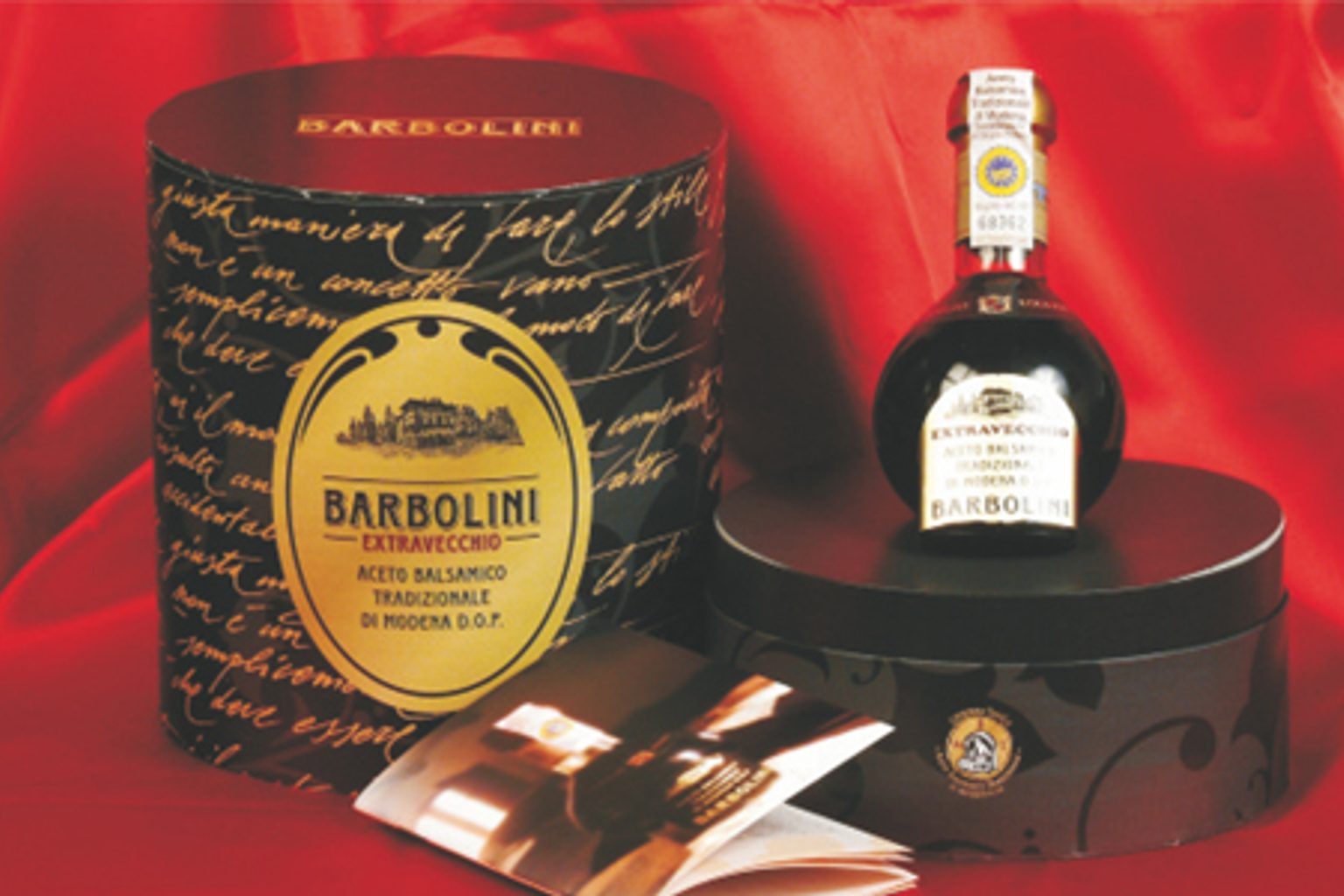
Protected Designation Requirements Production specifications require that the assembly of raw materials, processing, maturation, and/or aging must occur exclusively in the provinces of Modena and Reggio Emilia. A minimum maturation period of 60 days takes place in barrels, vats, or casks made from local wood varieties such as sessile oak, chestnut, mulberry, and juniper. When aged for three years or more, the product is categorized as Aceto Balsamico di Modena Invecchiato. If aged for five years or more, it is called Aceto Balsamico di Modena Riserva, a category that debuted in 2025. To be certified as Balsamic Vinegar of Modena, analytic and organoleptic tests by expert technicians and tasters are performed. Packaging must bear the words Aceto Balsamico di Modena IGP or the translated Balsamic Vinegar of Modena PGI to be considered authentic.
Why It Matters
With counterfeit and misattributed products proliferating in U.S. retail, the consortium's education-focused trade show presence directly addresses operator confusion around sourcing and authenticity. Strong consumer price tolerance and quality recognition signal sustained margin opportunity for foodservice and retail buyers committed to protected designation products.
For more insights and trends in the food and beverage sector, check out more articles in The Food & Beverage Magazine family of publications.
Written by FBM Publications Editors